
HPAI : Disease Information
Additional ResourcesHPAI Disease Factsheet
Importance
- Worldwide there are many strains of avian influenza
(AI) virus that cause varying amounts of clinical illness
in poultry. AI viruses are classified into low pathogenic
avian influenza (LPAI) which causes little or no clinical
signs in infected birds, and highly pathogenic avian
influenza (HPAI) which is a serious and often fatal disease
in birds. LPAI may mutate into HPAI, so outbreaks of
any type of AI need prompt attention.
- Two surface antigens, hemagglutinin (H) and neuraminidase
(N) are used to classify the viruses into serotypes.
Most of the isolates in recent outbreaks have been H5
or H7 viruses.
- Morbidity and mortality may approach 100%.
- HPAI is a zoonotic disease and human deaths have been
reported.
- Outbreaks of HPAI (H5N1) in SE Asia in late 2003 to
early 2004 were historically unprecedented in their geographical
scope, international spread and economic consequences
for the agricultural sector. Twenty-three humans died
and over 100 million birds died or were culled as a result.
- New outbreaks of HPAI (H5N1) occurred in June 2004 in SE Asia and spread into Eurasia by late 2005, causing both human and bird deaths.
Vaccination
- An inactivated H5 vaccine is licensed in the U.S. for emergency use in outbreaks. Vaccines are costly and do not offer cross protection between the 15 serotypes of AI.
Transmission
- Migratory waterfowl are the natural reservoir for avian
influenza.
- Feces and respiratory secretions contain large amounts
of virus which can infect new hosts through conjunctiva
absorption or the respiratory
tract. AI is also spread by aerosol, shared drinking water, and fomites.
- Incubation period is commonly 3-14 days.
Clinical Signs in Poultry
- Avian influenza may affect the respiratory, nervous
and digestive systems. Respiratory signs include nasal
discharge, coughing and sneezing. Nervous signs may include
depression, ataxia and torticollis. Digestive signs may
include inappetence and watery diarrhea that progresses
from bright green to white.
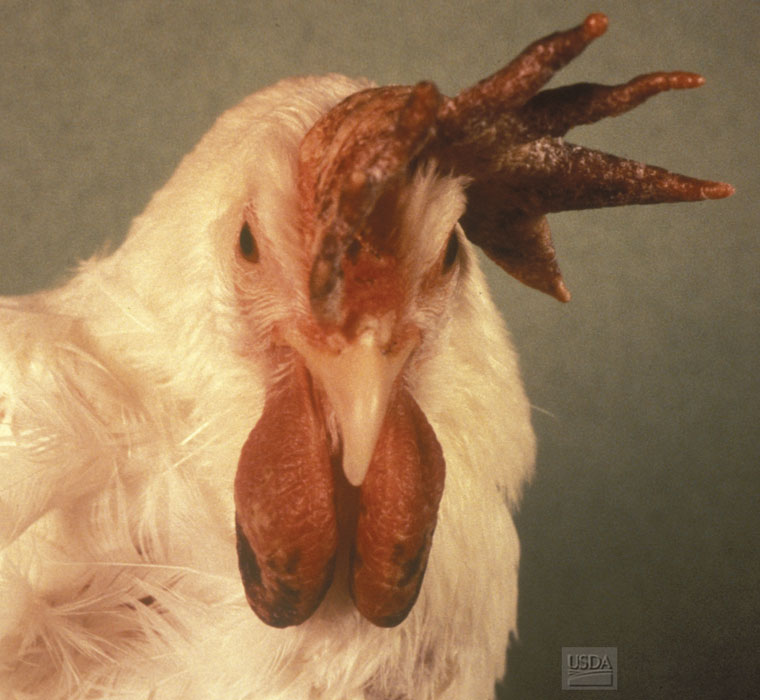
- Birds affected with any form of AI may show one or more of the following signs: sudden death without clinical signs, decreased egg production, softshelled or misshapen eggs, swelling of the head, eyelids, comb, wattle and hocks, and cyanosis of the wattle, comb and legs.
Differential Diagnosis
Exotic Newcastle disease (END), infectious laryngotracheitis and acute bacterial diseases including fowl cholera and E. coli infections.
Diagnosis
Definitive diagnosis requires virus isolation and identification in the laboratory. Tracheal or cloacal swabs from live or dead birds, as well as feces, can be used for virus isolation and identification.
Disinfection
Avian influenza viruses are relatively unstable in the environment and are inactivated by extremes in pH, heat, and dryness. In the presence of organic matter, AI virus can be inactivated by aldehydes. After removal of organic matter, several classes of disinfectants will be effective at destroying avian influenza virus: phenolics (e.g. One Stroke Environ), quaternary ammonium compounds (e.g. Roccal), oxidizing agents (e.g. Virkon), and dilute acids (e.g. peracetic acid).
Recommended actions if HPAI is suspected
Contact State and Federal veterinarians immediately.